- Speaker
-
 Paul Chaikin, Ph.D.Silver Professor of Physics, New York University
Presidential Lectures are a series of free public colloquia spotlighting groundbreaking research across four themes: neuroscience and autism science, physics, biology, and mathematics and computer science. These curated, high-level scientific talks feature leading scientists and mathematicians and are designed to foster discussion and drive discovery within the New York City research community. We invite those interested in these topics to join us for this weekly lecture series.
Systems with more order take less information to describe. Computers take advantage of this fact to reduce the size of files such as photos and video without sacrificing quality. The Computable Information Density, or CID, is a way of quantifying the information in a system. The CID is the ratio of the length of a losslessly compressed data file to the uncompressed length of the original file. It also provides a new and essential way of studying systems, such as identifying critical points, critical exponents and the order of dynamical phase transitions.
In this lecture, Paul Chaikin will describe how lossless data compression enables the quantification of order in non-equilibrium and equilibrium systems of many interacting components, even when the underlying form of order is unknown. He will consider absorbing state models on- and off-lattice and active Brownian particles undergoing motility-induced phase separation. The technique identifies non-equilibrium phase transitions, determines their character, quantitatively predicts exponents for correlation lengths and critical slowing down, without prior knowledge of the order parameters and reveals previously unknown ordering phenomena. This technique should provide a quantitative measure of organization in condensed matter and other systems that exhibit collective phase transitions.
About the Speaker
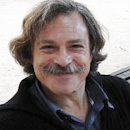
Chaikin is a Silver Professor of Physics at New York University and co-founder of the Center for Soft Matter Research. He received his bachelor’s degree from Caltech in 1966 and his Ph.D. from the University of Pennsylvania in 1971. He previously held professorships at UCLA, the University of Pennsylvania and Princeton University, where he is the Henry DeWolf Smyth Professor of Physics Emeritus. Chaikin has served as a consultant to Exxon Research, the NEC Research, Solvay and MARS. He is the recipient of the 2018 APS Buckley Condensed Matter Prize. His research focuses on many-body problems, the Kondo effect, superconductors, density waves, organic conductors, quantum Hall, colloids, diblock copolymers, self-assembly, artificial self-replication, active matter, and topological defects.